May 18, 2016

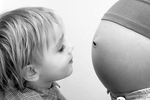
The Magic of Breastmilk

Posted By:

A young mother told to me the other day how her friend, another mother, stated that breastfeeding was a really selfish act on the part of a woman as it denies the father the chance to bond with his baby.  She found this a sad reflection of how un-informed mothers are today. And indeed, it is truly a sad, misguided and mis-informed line of thinking. 

There are so many ways a father bonds with his new child. No other mammal, forfeits feeding her young so that the task can be shared. And yes, I know we differ dramatically from other mammals but we have mammary glands expressly for this purpose. 


I am not sitting in judgement on those women who choose not to breastfeed or are struggling to do so, but to deny your baby this most magic of suppers, this most delightfully ever changing intelligent elixir of life, just for the sole purpose of including dad in this one task, seems like an enormous mistake.  It is a decision made without a proper education of how unique and wonderful breastmilk is.  I am not admonishing this woman. She doesn’t know!  It is like a secret, not to be told, except to an elite few.  Why is this? Why isn’t the science of breastmilk right out there as common knowledge before the decision to have a child enters a woman’s consciousness?  Why aren’t we teaching our young women about their own innate magic?


Some of the magic is listed here:

Human breastmilk is specifically designed for human babies. It changes from feed to feed, from day to day according to the nutritional needs of your baby. There is a quiet choreography that occurs and baby gives signals to the mother’s body.  Mother’s body picks up these cues and the milk is changed to meet the changing needs of baby. Yes, I know it sounds like science-fiction but isn’t that just marvelous?


Breastmilk is anti-bacterial and also protects baby against certain pathogens. Also, there is a messaging system going on. Whilst baby feeds, bacteria are picked up and ‘read’ by the mother’s body which then makes antibodies to that pathogen, which is then fed back to the baby via her milk. Breastfeeding is an exchange of information which is necessary to start building a baby’s immune system. So all this furious exchange of information is going on in the secret silent world of the mother’s and baby’s immune system.


There is a hormone in the gut that signals satiation and gives the baby that ‘milk drunk’ look. Mother and baby both release it during feeding. Baby gets a peak of this hormone after feeding and then again half an hour or and hour or so after feeding when milk reaches the GI tract. Between these peaks, baby may ‘wake’ again to feed some more (maybe 10 minutes or so after feeding but it varies) which is when they may finish feeding on one breast or may be offered the other.  I call this ‘waking up for pudding’ after the main course. Around 30 minutes after ‘pudding’, mother’s can take advantage of the second hormone peak and put baby down for a nap.


Breastmilk contains nutrients especially designed to enhance the growth of baby’s central nervous system and visual centres.


Pre-term babies will get a different composition of breastmilk than a full term baby. And, here's more science fiction, because HOW does mother’s body know, but, this magic stuff is different for boys than for girls! That’s right. Boy babies receive milk that is higher in fat and protein.


Breast milk can also be used to help eye infections, ear infections,  and can help reduce itching and stinging, to mention a few health benefits other than nourishing baby.  It’s like this miraculous gift from Mother Nature. 

I don’t want mothers who aren’t breastfeeding to feel intimidated or guilty or defensive reading this. That is not my intention. A decision not to breastfeed is an personal decision and I can only hope, an informed one. What is heartbreaking to me is a woman who says ‘she can’t or couldn’t breastfeed’. To me, this is a woman who wanted to and tried to, but did not have the right support network around her to offer her the assistance she needed. That is a failing of our society or our health system or our lack of offering education early on in life to our young women (and men). It is very rare that a woman is truly unable to breastfeed.


However a decision NOT to breastfed based solely on the premise that it means dad can help feed the baby is a terrible indictment on how we are raising the next generation with next to no information on the miracle that is the vessel within which they reside.


http://www.llli.org/nb/nbmarapr06p82.html


http://www.ncbi.nlm.nih.gov/pmc/articles/PMC3586783/


http://www.infantnutritioncouncil.com/resources/breastmilk-information/


http://www.medicaldaily.com/6-surprising-natural-uses-breast-milk-247460


May 12, 2016

Sciatica is not a Diagnosis

Posted By:

An elder came in the other day in a lot of pain and discomfort.  She is of a generation that was evacuated during the war and has that stoical sense about her that ‘just gets on with things’. She is really healthy and trim and has beautiful skin.  When I saw her, she had been suffering for about a week, and was in considerable pain and unable to sleep.

Her GP told her she had ‘sciatica’.  Ok. Sciatica is not a thing. It is not a proper diagnosis, but a word that describes a bundle of nerves that exits the spinal cord and serves the leg.  Everyone has a two sciatic nerves.  Telling someone they have ‘sciatica’ is like telling someone they have a toothache. They KNOW they have sciatic pain. That’s why they have come. To tell them they have pain when they are sitting there agonizing through it, feels patronizing to me. The real question deserving of an answer is, why?


So, it is okay for the doctor not to know why as there is more than one condition that can cause this terrible pain, but it does frustrate me that this lovely woman is palmed off with this ‘diagnosis of sciatica’ when it is not a diagnosis. I may not know exactly what the diagnosis is either, but it just seems to me that giving someone a ‘descriptive word’ does not help in easing their pain.  The thing is, I can’t help wondering what steps would have been taken had she been 30  or 40 years younger.  Many of the elders that come to me don’t seem to be getting the health service they deserve. I might be just super sensitive to this but it just sometimes seems that, because of their age, less is offered and more is put down to ‘old age’. 


She is healthy. She is fit. She takes no medications and gets plenty of exercise and fresh air. She is a vital participant in her community. She is not at the end of her life but we can’t pretend that she isn’t nearer to it. Still, it doesn’t mean she should go home and suffer this pain and stop living her very full and productive life.  She isn’t less important than someone younger. 


I am not ending this with an answer to solve this problem. But it is an increasingly annoying situation to me that our elders seem to get swept to the curb as less important members of our society. We are all (hopefully, actually) going to get there and I am quite sure that we will expect to be treated with the same respect as anyone else.


Apr 29, 2016

Fear of Birthing

Posted By:

As an osteopath, I have talked to many women over the years about their birth experience. It is part of the case history we take and it helps us frame what each woman carries in her body tissue memory.  As a doula, I am now beginning to realise that we carry a body tissue memory of birth long before we even know how to get pregnant.  It is almost like we are in danger of writing a warped view of birth into our very genetic code. The number of pregnant women I see (as both osteopath and doula) who are frightened of the whole experience far outnumber those who know it in their bodies to be a natural ongoing continuum of human nature. This is deeply saddening but not surprising when you become aware of the messages we feed our children about human birth.  When my first son was small, he was addicted to nature programmes. He could never watch enough of them. It didn’t matter what they were about and I am sure he saw his share of natural births except... not one of them would have included a human mammalian birth. For that one, he would have seen it on an emergency medicine drama or a sit-com, like Friends.  There are many examples of human births on television.  All of them, high-tech hospital births with a woman on her back invariable screaming and fearful.  So this is the message our society sends to our children without even meaning to: that every other mammal on the planet gives birth instinctively and unaided, but no human mammal can ever do this.  When was the last time you remember a natural birth depicted in a drama/sit-com on television? Exactly.  But I do. It is seared into my memory because I was so stunned ( and excited) that a home birth had been written into a script. The isolated environment of the show demanded it, of course, but still. It was called Northern Exposure and was about a small town in Alaska and ran in the early 1990’s. The young woman running the bar gave birth upstairs whilst the townspeople awaited eagerly for news in the bar. They didn’t actually show the enactment of giving birth (like they do in Friends with stirrups, bright lights, machines etc), but at least the audience had to know that she gave birth on her own as naturally as the moose outside her door.

How can we change this culture of fear and begin to teach women to trust their bodies again? Our bodies are truly awesome. They MAKE people from two cells. It creates a special organ called the placenta used for the sole purpose of supporting a new life. We are designed to give birth even as evolution has made us bidpedal. Amazing transformations occur in a woman’s body to allow her pelvis to carry and then birth her new baby. And then, once a baby is born, our bodies carry on growing a human with breast milk. It is so astonishing that our bodies do these things without any real input from our thinking brain. It is all the miraculous doings of Mother Nature.  


I wish we could stop teaching fear and start teaching the awe-inspiring beauty that is birth.


Apr 18, 2016

Do You Get A Regular Cervical Smear Test?

Posted By:

I popped into the GP surgery the other day for an unrelated reason, but both the nurse and the GP with whom I spoke, both reminded me that I was due a cervical smear test. In reality, I stopped having regular smear tests after my first child was born. (I think they could probably see that on my records.) I had done considered research at that time and decided that my 'choice' was to opt out, but gave myself the option of changing my mind.  That was years and years ago. I don't have need to visit the GP often so hadn't really thought about it until both the nurse and the doctor reminded me the other day.  It got me thinking that maybe I should re-visit my feelings about this. Then, I came across this article written by a GP in 2012 for The Independent.  I appreciate how she appears to have the view that what we screen for should be a dynamic 'shared' decision between doctor and client. (I intentially use the word 'client' because 'patient' insinuates that we are passive participants in decisions that affect our health).  I also appreciate that anyone reading this may still feel like they want the screening. That is absolutely fine. I pass no judgements. I am quite aware that my decisions are for me and for no one else and would not be the right thing to do in different circumstances.  One size does not fit all.  

Anyway, for what it's worth, I have added the link here so you can read her article, which to me, feels like a fairly measured and practical point of view.

http://www.independent.co.uk/life-style/health-and-families/features/why-im-saying-no-to-a-smear-7577967.html

Mar 8, 2016

Maybe A Little Compassion All 'Round

Posted By:

I have just finished reading Vaccine Epidemic edited by Louise Habakus and Mary Holland.  

Before you recoil in horror and start chanting ‘anti-vaxxer’ at my virtual door, let me explain.  This is a book of collected essays written by prominent professionals.  Included in this book are eloquently written chapters by medical doctors, biochemists, attorneys, gastroenterologists, microbiologists and military veterans, just to name a few.


It isn’t so much about ‘don’t vaccinate’ but about ‘informed choice’. What saddens me about this whole debacle is that people have polarised  into two camps. Those who feel the need to vaccinate and those who don’t.  How much better it would be if we could join forces and use a united voice, a united power, to call for ‘better science’ regarding vaccinations and ‘improved properly licensed’ ingredients in vaccinations. All our children are valuable and deserve the best. A parent doesn’t take lightly the decision not to vaccinate. Many parents that cross my threshold are equally hesitant about carrying out the vaccination program on their tiny babies. It is an agonising decision for all.


The heartbreak endured watching a desperately sick child fighting an illness is not owned by one camp or another. Often, it is the family that HAS vaccinated and has lived through the horror of vaccine damage unfolding within their family, that precipitates a change in their choices.


Perhaps a little compassion on both sides would help us rise up and demand that vaccines be made safer.  Isn’t it a little too easy for the Big Pharma to keep bankrolling billions in profits from vaccine programmes whilst we fight among ourselves about who is right?


No one is right who has suffered the death of a child through illness or who has suffered the catastrophic disability of  vaccine-damage. They are only heartbroken and would do anything, anything, anything to turn back the clock in order to make a different decision.


We could do ourselves a favour and find one voice and protest for better science, better trials, and a more practical schedule; perhaps one that vaccinates children who actually have immune systems rather than infants who are born with very immature, unused ones?

Or separated vaccinations?  Why on Earth does an infant need a diphtheria vaccine in England? or a tetanus? for instance.  Why don’t we have a choice to vaccinate with the MMR with separate injections?


And one last point which I find interesting. Has anyone EVER been given the list of side-effects and contraindications that go inside the vaccination box when received from the pharmaceutical company?  No? I didn’t think so.

Interesting Stuff

Here are some services that you may find helpful:

Acupuncture                             David Reynolds  www.southviewclinic.co.uk

Allergy/Food Sensitivity
Christine Wilson
www.lovemyhealth.co.uk

Aromatherapy/Massage
Cheryl Brickell
www.relaxintohealth.co.uk

Meli Paramio
01628 625313

Hypnobirthing                            Harriet Hancock   www.stressfreebirth.co.uk

Hypnotherapy
Ros Mandeville
www.highersolutions.co.uk

Homeopathy
Anita Happy and Sheila Carter Homeopathy for Children in Henley   01344 867 411

Catie Sharples 01628 530302 http://www.catiesharples.com

Manual Lymph Drainage
Marilyn Homer
01628 671406

Rolfing (Massage)
Fiona Millward 07824 397313  www.fionamillward.com

NLP/Reflexology
Jeanette Wallis
www.wallishealth.co.uk

Nutritional Therapy
Helen Bradbury
http://www.nutritionalwellness.co.uk

Physiotherapy
Alex Reynolds
www.southviewclinic.co.uk


YOU MAY FIND LINKS TO: Osteopathic and Doula Resources.

© 2026 Cookham Osteopathy   | Privacy Policy
Web Design